
It’s Saturday morning…
The sun is barely up. The grass is still wet.
Your child has the ball.
Space opens up to the right.
The coach calls one thing from the technical area. You call something different from the fence.
Your child hesitates.
Not because they don’t know what to do.
Because they do…
They know exactly what both of you want. And in that split second, that tiny fragile moment when instinct should take over, they freeze.
They’re not thinking about the game anymore.
They’re thinking about you.
I’ve seen that moment a thousand times in forty years of playing and coaching. And every single time, something inside me angers.
Because that child isn’t confused about soccer.
They’re confused about love.
They’re asking a question no child should ever have to ask on a soccer pitch.
Whose approval do I need more right now?
Not the screaming parent. Not the one who storms off in anger or humiliates their child in front of the team.
Just an ordinary parent. A loving parent. A parent who drove forty minutes on a Saturday morning because they care.
A parent who, without realising it, just made their child’s world a little smaller.
I’ve never once met a soccer parent who meant any harm.
Not one.
But meaning well and doing well are not always the same thing.
And the gap between the two, that small invisible gap, is where children learn to love the game.
Or learn to leave it.
Which Sideline Soccer Parent Are You?
In forty years of playing and coaching I’ve stood on a lot of sidelines.
Cold ones…
Muddy ones…
Abusive ones!
Sidelines in the pouring rain where nobody in their right mind should have been standing. And in all that time, across all those weekends, I’ve noticed something.
There are really only five types of soccer parents.
See if you recognise yourself.
The Coach
This parent knows the game. Or thinks they do.
They position themselves as close to the pitch as possible. They call instructions constantly. Loudly. Specifically. Track back. Push up. Pass it. Shoot. Why didn’t you shoot?
They mean every word with love.
But here’s what their child is experiencing. Two coaching voices. Two sets of instructions. Two people to disappoint.
The coach on the technical area has a plan. The parent on the fence has a different one. And your child, caught between the two, stops trusting either.
Worse…
They stop trusting themselves.
The Sergeant
This one is harder to watch.
Every mistake brings a reaction. Every lost ball, every missed tackle, every goal conceded draws a grimace, a groan, a sharp word from the sideline. Winning isn’t just important to this parent.
It feels essential.
Their child knows it. Feels it. Carries it onto the pitch like a weight strapped to their back.
I’ve watched kids physically shrink after glancing over at a parent like this. Shoulders drop. Head goes down. The game inside them gets smaller.
Children are extraordinarily sensitive to the emotional state of the adults they love. When your anxiety about the result becomes visible, it becomes their anxiety too.
And anxious children do not play freely.
They do not take risks.
They do not grow.
The Ghost
Back by popular neglect…
This parent is there. Technically.
They’re sitting in the car fifty metres away. Or they’re on their phone, scrolling, glancing up occasionally, half present and half somewhere else entirely.
Now you might think this is harmless. At least they’re not over-coaching.
But children notice everything.
Your child scans the sideline after every good moment. Every tackle won. Every pass completed. They are looking for one face.
Yours.
And when that face is buried in a screen, the message received is quiet but powerful.
This doesn’t matter enough for my full attention.
It doesn’t take much to be present. But the absence of presence is something a child never forgets.
The Timekeeper
This parent has a stopwatch. Sometimes literally.
They track every minute their child plays. They compare it to every minute other children play. And if the numbers don’t add up to what they believe is fair, they will find a way to make sure the coach knows about it.
After the game. At training. Via email on a Tuesday night.
I understand the instinct. You love your child. You want them to have every opportunity. You don’t want them overlooked.
A child who knows their parent is counting minutes stops focusing on getting better and starts focusing on getting time. Two completely different mindsets. One builds a soccer player. The other builds resentment.
Trust the process.
Trust the coach.
And trust that your child’s development is not measured in minutes.
The Fan
This one is rare.
I want you to know that because I don’t want you to think it comes naturally to everyone.
It doesn’t.
It’s a choice.
Made deliberately.
Week after week.
This parent stands quietly on the sideline. They smile when their child does something well. They stay composed when things go wrong. They cheer for effort, not outcome. For the whole team, not just their own.
And when their child looks up from the pitch, which they always do, they always look for you, this parent is simply there.
Smiling.
Present.
Unconditional.
I have watched children play their absolute best soccer in front of a parent like this. Not because of the silence. Because of what the silence communicates.
I love watching you. Whatever happens out there, I love watching you.
That is the most powerful thing a parent can offer a young soccer player.
Not tactics. Not analysis.
Just that.
Most of us have been more than one of these parents at different times. On different days. In different seasons. That’s not a character flaw. That’s being human.
But awareness is where everything starts.
So the next time you walk to that sideline, ask yourself one honest question.
Which parent am I today?
And which one does my child need me to be?
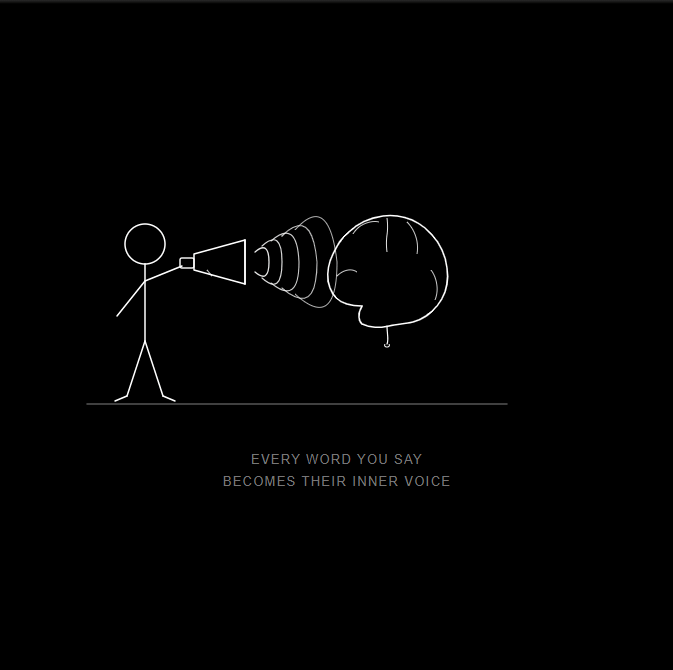
Soccer Parenting- What Your Child Actually Hears
I want to tell you about something I see at training.
Not occasionally.
Regularly.
A child who queues for a drill and quietly shuffles to the back of the line. Not because they’re tired. Not because they’re distracted.
Because they don’t want to go next.
Because going next means being watched. And being watched means the possibility of getting it wrong. And getting it wrong, somewhere along the way, has become something to be deeply afraid of.
I’ve coached children who arrive at training like a deflated ball.
No energy.
No spark.
Shoulders forward. Eyes down. The kind of silence that isn’t peaceful, it’s defeated.
I’ve had children cry during training for no apparent reason.
No collision.
No injury.
No obvious trigger.
Just tears.
Quiet ones.
The kind a child tries to hide because they’ve also learned that showing how they feel is another thing that might disappoint someone.
These children are not troubled.
They are not difficult.
They are not bad at soccer.
They are carrying something that was never theirs to carry.
The Gap Between What You Say and What They Hear
Here’s the thing about children that never stops humbling me.
They are extraordinary receivers.
Not of your words. Of your energy. Your tension. Your disappointment. Your hope. Your anxiety. Your love.
All of it lands.
All of it registers. Long before your words even reach them.
Dr John Gottman, one of the world’s leading researchers on emotional intelligence, spent decades studying how adults communicate with children. His research found that children who feel emotionally dismissed, even subtly, even unintentionally, develop a diminished capacity for managing their own emotions over time.
Let that sit for a moment.
You don’t have to say anything harsh. You don’t have to raise your voice. You don’t even have to say anything at all.
A sigh at the wrong moment says everything.
A crossed arm says everything.
A look that lasts half a second too long after a missed chance says everything.
Your child is reading you constantly. And they are reading you far more accurately than you realise.
Dr Daniel Siegel, a clinical professor of psychiatry at UCLA, describes what happens to a child’s brain in moments of emotional stress as “flipping the lid.” The rational, thinking brain essentially goes offline. The emotional brain takes over completely.
This is what happens to your child when they feel they’ve let you down.
They are no longer playing soccer.
They are in survival mode.
And no amount of encouragement, instruction or coaching will reach a brain that is no longer able to receive it.
The child hiding at the back of the line isn’t being difficult.
They’re protecting themselves.
From failure.
From disappointment.
From the look on your face that they’ve seen before and never want to see again.
What They Actually Need You to Know
Your child doesn’t need you to know more about soccer.
They need to know that you love watching them play.
Regardless of the result.
Regardless of the mistakes.
Regardless of whether they were the best player on the pitch or the one who spent most of the game looking at their boots.
Unconditional presence is not a parenting cliché. It is the single most protective thing you can offer a young athlete.
Brené Brown, whose research on shame and vulnerability has changed the way the world thinks about human connection.
Children need to know they are worthy of love and belonging not because of what they do but because of who they are.
Read that again in the context of a soccer pitch.
Your child should never have to earn your enjoyment of watching them play.
It should simply be there.
Every Saturday morning.
In every condition.
Win, lose or five goals down at half time.
So the next time you feel the urge to call out from the fence, to correct, to advise, to coach from twenty metres away, pause for just one second.
Ask yourself not what your child needs to hear right now.
Ask yourself what they need to feel.
Because what they feel in that moment, standing on that pitch, looking up to find your face, will stay with them long after the final whistle.
Long after the score is forgotten.
Long after the boots are handed down to a younger sibling.
What they feel when they look for you.
That forever…
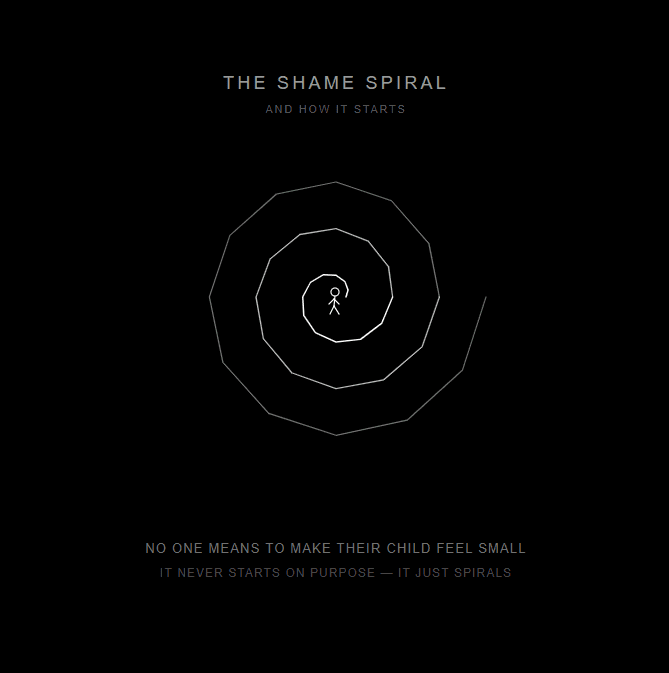
The Shame Spiral and How It Starts
Nobody sets out to shame their child.
Not one parent I have ever met has stood on a sideline thinking: I am going to make my child feel small today.
And yet.
It happens.
Quietly.
Gradually…
In the space between a well-meaning comment and a child’s tender heart.
Brené Brown has spent more than two decades researching shame and its impact on human behaviour. Her findings are confronting for anyone who loves a child.
Shame, she found, is not the same as guilt.
Guilt says: I did something bad.
Shame says: I am bad.
Guilt is actually healthy. It helps children learn from mistakes, correct course and grow. But shame does the opposite. Shame makes a child want to hide. To disappear. To stop trying altogether.
And here is the part that keeps me awake at night.
Most children don’t need to be told they’ve done something wrong to feel shame.
They just need to sense it.
In a tone of voice.
In a moment of silence.
In the absence of the smile they were hoping to find when they looked up from the pitch.
The Story They Start Telling Themselves
Children are meaning-making machines.
When something happens that they don’t understand, they don’t leave it blank.
They fill it in.
With a story about themselves.
And the stories children tell themselves about their worth, their ability and their place in the world are almost always written by the reactions of the people they love most.
When a parent winces after a missed shot, the child doesn’t think: Dad is just frustrated with the situation.
They think: I disappointed him.
When a parent goes quiet on the drive home, the child doesn’t think: Mum needs a moment to decompress.
They think: She’s angry with me.
When a parent compares them to a teammate, however gently, the child doesn’t think: That’s just an observation.
They think: I’m not enough.
These stories, once written, are incredibly hard to rewrite.
They don’t stay on the soccer pitch either.
They follow your child into the classroom. Into friendships. Into how they respond to failure and challenge for the rest of their life.
Carol Dweck’s landmark research on mindset showed that children who believe their abilities are fixed, who believe they are either good at something or they’re not, give up faster, avoid challenge and recover poorly from setbacks.
And where does a fixed mindset come from?
More often than not, it comes from the language and reactions of the adults closest to them.
Not from cruelty.
From love that didn’t know how to express itself differently.
The Moment the Spiral Begins
I have seen it happen in a single training session.
A child attempts something difficult. A skill they have been working on. They get it wrong. They look up immediately, instinctively, to find a parent’s face.
The parent, without saying a word, looks away.
That’s all it takes.
The child doesn’t attempt that skill again for weeks.
Not because they can’t do it.
Because the risk no longer feels worth it.
That is the shame spiral in its earliest form. A child who begins to edit themselves. Who starts choosing safety over growth. Who learns that attempting something and failing is more dangerous than never attempting at all.
And once that pattern is established, it is very hard to break.
…because the child who stops trying on the soccer pitch is practising something.
They are practising giving up.
And practice, as every coach knows, makes permanent.
The good news is this.
The spiral can be interrupted. At any point. By one thing.
A parent who makes it safe to fail.
Not a parent who pretends failure doesn’t hurt.
Not a parent who offers hollow reassurance.
A parent who sees their child fail, stays calm, stays present and communicates without a single word:
You are still exactly enough.
That moment, repeated consistently, becomes the foundation of something extraordinary.
A child who is not afraid.
And a child who is not afraid will try things.
And a child who tries things, fails at things, gets back up and tries again?
That child becomes unstoppable.
Not just on the soccer pitch.
Everywhere.

The Car Ride Home
The game is over.
Your child climbs into the back seat.
Boots still muddy. Shin pads still on. Heart still racing from forty minutes of everything they had.
And in that moment, before a single word is spoken, they already know.
They can feel it.
They read the temperature of that car the way a sailor reads the weather.
Instantly.
Accurately.
With a precision that would astonish you if you knew how carefully they were doing it.
Was it a good result?
Then maybe the drive home is okay. Maybe there’s music. Maybe you stop for food. Maybe you tell them they did well and for a few kilometres the world feels light.
Was it a bad result?
Then the silence that fills that car is not peaceful.
It has weight.
It presses down on small shoulders that are already carrying more than they should.
And your child, pressed against the window, watching the suburb blur past, is doing one thing.
Waiting…
The monologue, when it comes, rarely starts loudly.
It starts with a sigh.
Or a question that isn’t really a question.
“What were you thinking in the second half?”
“Did you even try to track their striker?”
“I just don’t understand why you won’t listen to what I tell you.”
And then, sometimes, it goes somewhere else entirely.
Somewhere a child has no defence against.
The sacrifice.
“Do you know how much this costs us every month?”
“Do you know how early I have to get up on a Saturday morning for this?”
“I do all of this for you and I just need to see you trying.”
These words are not spoken with cruelty.
They are spoken with exhaustion.
With genuine love.
With the frustration of a parent who has given everything and cannot understand why it doesn’t seem to be enough.
But here is what the child in the back seat hears.
You are a burden.
You are ungrateful.
Your effort today was not sufficient payment for my sacrifice.
No child should ever feel that about something they are supposed to love.
What the Research Tells Us
Dr Daniel Siegel’s work on the developing brain helps explain why this moment is so critical.
After a game, a child’s nervous system is still processing an enormous amount.
Physical exertion.
Emotional intensity.
Social complexity.
Win or lose, their brain is working hard just to come down from the experience.
In this state, the brain’s capacity to receive feedback, to process criticism, to respond rationally to instruction is at its lowest point.
Which means that everything you say in that car, however well intentioned, lands on a nervous system that is not equipped to handle it.
It doesn’t disappear though.
It gets stored.
And what gets stored is not the content of what you said.
What gets stored is how they felt.
Ashamed.
Not good enough.
Responsible for your mood.
I have spoken to adults, parents themselves now, who remember almost nothing about their youth soccer career. Not the goals. Not the trophies. Not the friendships.
But they remember the car ride home after a bad game.
Word for word.
Decades later.
That is the power of that moment.
And it works both ways.
The Drive That Changes Everything
Here is what I want you to try.
After the next game, whatever the result, whatever happened out there, let your child get in the car and say nothing about soccer.
Nothing.
Put on their music. Ask if they’re hungry. Talk about whatever they want to talk about.
And if the silence comes, let it be the peaceful kind. The kind that says: I am just glad you’re here. I am just glad I got to watch you today.
If they want to talk about the game, they will.
Let them lead.
Let them choose what matters. Let them own the story of their own experience.
And when they do talk, resist every instinct to correct, to add, to improve upon what they’re saying.
Just listen.
Dr John Gottman calls this emotion coaching. The simple, radical act of acknowledging what a child feels before attempting to fix or advise.
It sounds almost too simple.
It is not simple.
It is one of the most powerful things you will ever do for your child.
Because a child who climbs out of that car feeling heard, feeling accepted, feeling like the result had absolutely no bearing on how much you enjoyed watching them play?
That child will get back in the car next Saturday morning without hesitation.
That child will run back onto that pitch with something in their eyes that no training session can manufacture.
Joy.
Unconditional, uncomplicated joy.
The same joy that was there the very first time they kicked a ball.
Yours to protect.
Every single drive home.
The Praise Trap
Let me share something that will stay with you.
I have stood on sidelines and heard parents say things they genuinely believed were helping.
Encouraging things…
Supportive things…
Things said with nothing but love in their heart.
And I have watched their child shrink with every word.
Because here is the truth about praise that nobody tells you at the start of the season.
Praise delivered the wrong way is not neutral.
It creates pressure.
It sets conditions.
It tells a child, quietly and persistently, that your approval is something they have to keep earning.

The Words That Wound Without Meaning To
“You should have passed earlier.”
“You could’ve scored if you’d been more aggressive.”
“You’re not listening out there.”
“Why aren’t you helping your teammates?”
These are not attacks. They are observations from a parent who knows the game and wants their child to improve.
But hear them through your child’s ears.
Every single one of them is a message about what was lacking.
Not what was there.
Not what was given.
Not the forty minutes of effort and courage and showing up and trying.
Only what was missing.
And then there is the most dangerous sentence in the soccer parent vocabulary.
“You played well, but…”
That single word — but — erases everything that came before it.
Your child hears nothing before the but.
Nothing…
The compliment vanishes. The qualification remains. And what remains becomes the thing they carry home, the thing they think about before they fall asleep, the thing that quietly shapes the story they are telling themselves about who they are as a soccer player.
The Comparisons That Cut
“When I played…”
Three words that immediately create an impossible standard.
Your experience of the game, filtered through decades of memory and nostalgia, is not a useful benchmark for a ten year old finding their feet on a Saturday morning.
It is a weight.
And then there are the comparisons that go the other way.
“You were the best player out there today. The coach has no idea what he’s doing.”
This one sounds like support. It feels like loyalty.
But think about what you are actually giving your child.
You are telling them the person responsible for their development is incompetent.
You are creating division between your child and their coach.
You are building an identity around superiority rather than growth.
And when the next game comes and your child has a difficult day, because difficult days always come, they have nowhere to go. The pedestal you built is the thing they fall from.
Dr Carol Dweck’s research on mindset is unambiguous on this point.
Children who are praised for their talent, for being the best, for natural ability, develop what she calls a fixed mindset. They become afraid of challenge because challenge threatens the identity that has been built for them.
Children who are praised for effort, for persistence, for the willingness to try difficult things, develop a growth mindset. They embrace challenge because they understand that struggle is where improvement lives.
The difference in outcomes over time is extraordinary.
And it starts with the words you choose after the final whistle.
“Did You Win?”
Three words.
The first thing many children hear when they reach their parent after a game.
Not: How did you feel out there?
Not: Did you enjoy it?
Not: I loved watching you today.
Did you win?
When that is the first question, the scoreboard becomes the measure of the experience. And a child who learns to measure their experience by the scoreboard will only ever enjoy soccer when they’re winning.
Which means they will only ever feel good about themselves when they’re winning.
That is a fragile foundation for a young life.
“Don’t Worry, the Coach Should Have Played You More”
This one comes from pure parental love.
Your child is hurting. You want to take the pain away. So you redirect it. You give them somewhere else to put it.
But what you are actually doing is teaching your child to externalise disappointment. To find someone else responsible for their experience. To avoid sitting with the discomfort that builds character.
Angela Duckworth’s research on grit, the combination of passion and perseverance that predicts long term success, shows clearly that the ability to tolerate frustration and persist through difficulty is one of the most important qualities a young person can develop.
That quality is not built by being rescued from disappointment.
It is built by learning to sit with it, process it, and come back anyway.
Your child needs to learn that lesson.
The soccer pitch is one of the safest places in the world to learn it.
Don’t take that opportunity away from them.
And Then There Is the Silence
I have saved this one for last because it is the one that haunts me most.
Not the criticism.
Not the comparison.
Not the misguided praise.
The silence.
A child who has just run themselves into the ground for forty minutes, who has given every ounce of what they have, who has made mistakes and recovered and tried again, walks toward their parent after the final whistle.
And receives nothing.
No words.
No smile.
No acknowledgment.
Just a parent already walking back to the car.
Already somewhere else.
In that moment, silence is not the absence of a message.
It is the loudest message of all.
And what it says to that child, in the most vulnerable moment of their week, is this…
What you just did was not enough to earn my reaction.
I have watched children in that moment.
The way the light goes out of their eyes.
The way their shoulders fall.
The way they look at the ground and walk quietly to the car and say nothing for the entire drive home.
Because what is there to say?
From Coach to Fan
The identity shift I am talking about is not complicated.
But it is profound.
It is the shift from coach to fan.
From evaluator to supporter.
From someone who watches the game to someone who watches their child.
A coach looks for what needs fixing.
A fan feels the joy of watching.
A coach measures performance against expectation.
A fan is simply grateful to be there.
A coach’s love is sometimes conditional on what happens on the pitch.
A fan’s love has nothing to do with what happens on the pitch.
Your child already has a coach.
They have exactly one person in the world who can be their unconditional fan.
You.
And here is what I want you to understand about that role.
It is not a lesser role.
It is the most important role.
Because a child who knows they have one person in the world who will love watching them regardless of the result will play with a freedom that no amount of coaching can manufacture.

What the Science Tells Us
Dr Madeline Levine, a psychologist who has spent decades working with children and families, found that the most damaging thing a parent can do is not neglect or harshness.
It is conditional involvement.
Being present and supportive only when a child performs well.
Withdrawing emotionally, even subtly, when they don’t.
Children, she found, experience this pattern as a fundamental threat to their sense of security. And children who feel insecure do not take risks. They do not explore. They do not grow.
They play it safe.
And playing it safe on a soccer pitch means never attempting anything difficult.
Never attempting anything difficult means never improving.
And never improving means eventually, quietly, walking away from the game altogether.
The antidote is not complicated.
It is consistent, unconditional presence.
Showing up the same way after a loss as you do after a win.
Offering the same warmth after a mistake as you do after a goal.
Being, in every weather and every result, simply and completely there.
The Fan in Practice
I know what you might be thinking.
This sounds beautiful in theory. But what does it actually look like on a Saturday morning?
It looks like this.
You arrive at the ground and you find a spot on the sideline that feels comfortable. Not pressed against the fence. Not positioned to be heard. Just a spot where you can see your child and your child can find your face.
When they look up, and they will look up, they see you smiling.
Not assessing.
Not calculating.
Smiling.
When something goes well you cheer. Genuinely. For effort and courage and the willingness to try, not just for the outcome.
When something goes wrong you stay calm. You do not react. You do not grimace or sigh or look away.
You stay exactly the same.
Because that consistency, that absolute reliability of your warmth regardless of what happens on the pitch, is the greatest gift you will ever give your child in sport.
When the game ends you walk to them and you say four words.
I loved watching you.
Not: you played well today.
Not: here is what I noticed.
Not: next time you should.
I loved watching you.
The Ripple Effect
Here is what happens when a parent makes this shift.
The child relaxes.
The child stops scanning the sideline for approval and starts playing the game.
The child starts taking risks. Making decisions. Expressing themselves on the pitch in ways you have never seen before.
The child starts improving.
Not because they are training harder or being coached better.
Because they are finally free.
And freedom, on a soccer pitch, looks like a child who fights for every ball not out of fear but out of pure love for the game.
That child is unstoppable.
That child will play for as long as their body allows.
That child will carry what soccer taught them, resilience, courage, the ability to fail and get back up, into every corner of their life.
And you will have given them that.
Not with tactics.
Not with analysis.
With four words on a Saturday morning.
I loved watching you.
A Letter From Your Child
I need you to read this slowly.
What follows is not research. It is not coaching advice. It is not backed by a study or a statistic or a university paper.
It is something far more important than any of those things.
It is the truth that lives in the heart of every young soccer player I have ever coached. The thing they most want to say and almost never know how to.
I am going to say it for them.
Dear Mum. Dear Dad.
I want you to know something.
I am not playing soccer to become a professional. I am not playing soccer to win trophies or earn scholarships or make you proud in the way I think you want me to.
I am playing soccer because its fun.
Because I like my new teammates.
Because for forty-ish minutes on a Saturday morning the whole world gets simple and clear and nothing matters except the ball and my friends.
And because you are there.
That’s the real reason.
You.
I want you to be happy. That is genuinely all I want. When I look up from the pitch and I see you stressed, or tense, or disappointed, something inside me tightens. Because I know that look. I see it sometimes when you come home from work.
I don’t want that.
I want to see you smile.
The way you smile sometimes when you don’t know I’m watching.
I want you to make friends with the other parents on the sideline the way I am making friends with the kids on the pitch. I want us to both walk away from Saturday morning feeling like we’ve had something good. Something that was just for us.
Because that’s what this is to me.
Not a performance.
Not a tryout.
Not an opportunity to be assessed.
It’s time with you.
And I would rather play badly and have you smile at me than play brilliantly and see that look on your face that tells me it still wasn’t quite enough.
I know you sacrifice so much to bring me here. The early mornings. The money. The hours on the sideline in the cold. I see all of it. I carry all of it.
And I just want you to know that the sacrifice I value most has nothing to do with any of that.
It’s the moment you look up from your phone.
It’s the moment you stop talking to the other parents and just watch me for a second.
It’s the moment after the game when you put your arm around me and don’t say anything about soccer at all.
Those are the moments I will remember.
Not the goals.
Not the wins.
You.
Always you.
Give yourself a moment with that.
Because if anything on this page has landed, it is that.
Your child is not asking for a better coach on the sideline.
They are not asking for more tactical analysis or sharper feedback or a deeper understanding of the game.
They are asking for you.
The real you.
The one who laughs too loud and makes friends easily and lights up a room.
The one they see at home and desperately want to see on that sideline too.
Bring that person to the game this Saturday.
Leave the coach in the car.
Your child will notice.
I promise you, they will notice.
Cheer for All the Players Equally
This one is simple.
And transformative.
When you cheer for every child on that pitch, not just your own, something shifts in the entire environment of the game.
The children feel it.
The other parents feel it.
And your child, watching you celebrate a teammate’s good moment with the same enthusiasm as their own, learns something that no training session can teach.
That this is bigger than them.
That generosity of spirit is something to be proud of.
That being a good teammate, a good sport, a good human being on a soccer pitch matters more than any individual performance.
I have watched the energy of an entire sideline change because one parent started cheering for every child equally.
It is that powerful.
Be that parent.
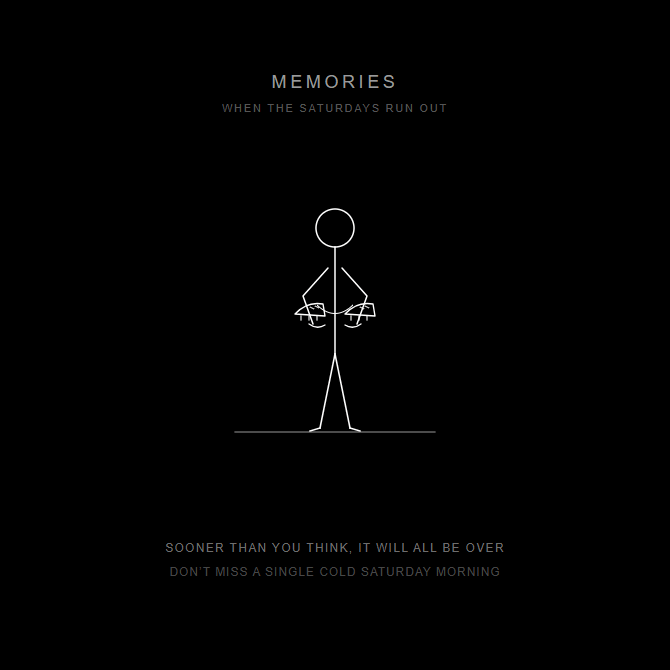
Appreciate the Time Together
This is the one that I want to leave with you above all others.
One day, sooner than you think, Saturday morning soccer will be over.
The boots will be outgrown for the last time.
The bag will stay in the cupboard.
The alarm will not go off at seven on a cold winter morning.
And you will miss it.
Not the wins or the losses or the tactical debates or the politics of the club.
You will miss the time.
The ordinary, unremarkable, irreplaceable time of standing on a muddy sideline watching your child do something they love.
So while it is here, while those boots are still being pulled on and that bag is still being packed and that small person is still looking up from the pitch to find your face, be present for it.
Fully. Completely. Without your phone. Without your anxiety. Without the weight of expectation.
Just be there.
Make friends with the parent standing next to you.
Laugh at something.
Feel the cold air and the smell of cut grass and the particular joy of watching a child who is completely, unselfconsciously alive in their body.
Because that is the gift.
Not the trophy at the end of the season.
This.
Right now.
This ordinary Saturday morning that you will one day look back on as one of the great privileges of your life.
Your child already knows that.
They have been trying to show you all along.
The Most Important Coaching Role in Youth Soccer
There is a coaching role in youth soccer that nobody talks about.
No badge required. No training course. No tactical manual.
But it is the most influential role on the entire pitch.
More influential than the head coach.
More influential than the academy director.
More influential than anyone else in your child’s soccer life.
It is yours.
The parent on the sideline.
The person whose face your child searches for in the crowd. Whose reaction shapes how they feel about themselves long after the final whistle. Whose presence, or absence, or warmth, or tension, becomes the emotional soundtrack of their entire youth sporting life.
That is you.
That has always been you.
And here is what I want you to carry with you from everything you have read on this page.
You do not need to be perfect.
You do not need to get it right every single Saturday morning.
You will have days where the old habits creep back in. Where the scoreline gets under your skin. Where you say something in the car that you wish you could take back.
That is not failure.
That is being human.
What matters is that you keep coming back to this.
To the awareness that your child is watching you as closely as you are watching them.
To the understanding that the way you show up on that sideline is shaping not just their soccer career but their sense of who they are and what they are capable of.
To the knowledge that the most powerful thing you can offer them has nothing to do with tactics or technique or understanding the game.
It is simply this.
Unconditional presence.
A smile that is always there when they look up.
A car ride home that feels safe regardless of the result.
A parent who loves watching them play not because of what they achieve but because of who they are.
That parent changes everything.
Not just for their child.
For the entire culture of youth soccer.
One sideline at a time.
One Saturday morning at a time.
One smile at a time.