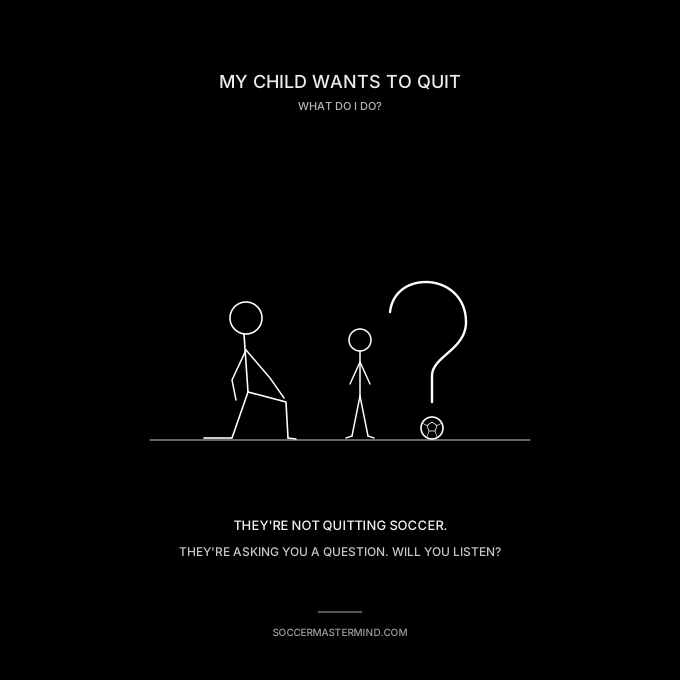
Your child is not quitting soccer.
They are asking you a question.
The question is: will you listen?
Most soccer parents miss this moment.
Not because they don’t care. Because they care too much. The panic sets in and suddenly the conversation is about registration fees and wasted potential and what they’ll regret when they’re older.
And the child…
The child who just needed to be heard… goes quiet.
They got their answer.
Slow Down
Don’t have the big conversation tonight.
Whatever was said… in the car, at the dinner table, boots still on… let it breathe.
Say something simple.
I hear you.
Let’s talk properly in a day or two.
Then let it go…
The child in front of you is full.
Full of emotions, full of whatever happened today that brought them to this moment. Nothing useful gets said when a person is that full.
Wait for the quiet.
The quiet is where the real conversation lives.
What They’re Actually Saying
In twenty years of coaching, I have never met a child who wanted to quit for no reason.
There is always a reason.
And it is almost never about soccer.
It is about not feeling good enough. About a friendship that broke. About a coach whose voice makes them fear. About Saturday mornings that used to feel like freedom and now feel like a test.
It is about feeling unseen.
Your job is not to fix the soccer.
Your job is to see them.
The Only Questions That Matter
When the moment is calm… just the two of you, ask these.
What’s the part you used to love?
Is that part still there?
What doesn’t feel good anymore?
Then stop talking.
Just listen.
Not to find the solution.
Not to build a counter-argument.
Not to remind them of the goals they scored last season or the friends they’d miss.
Just to understand.
A child who feels truly heard will tell you everything.
A child who feels managed will tell you nothing.
The Four Things That Actually Break
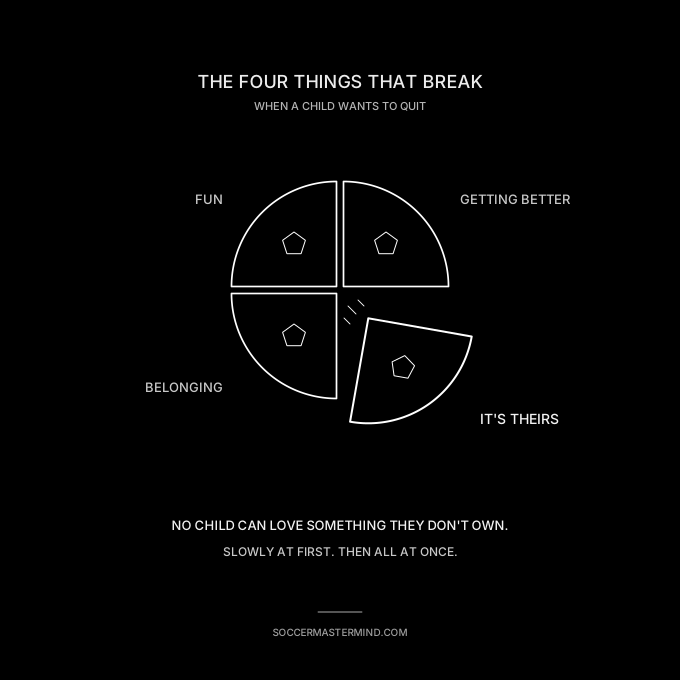
Every child who has sat in front of me wanting to quit has lost one of four things.
The fun.
The feeling of getting better.
The sense of belonging.
Or the feeling that the game is still theirs.
That last one matters more than most parents realise.
The moment soccer becomes something being done to a child rather than something they are choosing… the love starts to leave.
Slowly at first.
Then all at once.
No child can love something they don’t own.
What Not to Do
Do not let them feel that your happiness depends on their answer.
The second a child senses that staying or leaving will change how you feel about them, the conversation is over. They will tell you what you need to hear, not what is true.
Give them the real choice.
A child who is genuinely free to quit is a child who gets to genuinely choose to stay.
And choosing…
…really choosing, without guilt or pressure… is the only thing that makes the staying mean anything.
When Leaving Is Right
Sometimes it is.
I know that’s hard to read.
But I have watched enough children pushed through seasons they had already left in their hearts to know the damage it does. The resentment that builds. The way a game they once loved becomes something they associate with obligation and disappointing the people they love most.
Let them go well and the door stays open.
Force them to stay and you might win the season and lose the game entirely.
A child released with love… no guilt loaded onto their shoulders is a child who might just find their way back when something inside them is ready.
I have seen it happen.
More times than I can count.
They come back. On their own terms. With a fire nobody expected.
Because they were never pushed out.
They were let go.
When Staying Is Right
And sometimes that is right too.
The child who has always loved this game — who talks about it at dinner, who kicks a ball against the wall for an hour without being asked, who lights up at training — and who is suddenly done after one hard week?
That child is not done with soccer.
That child is done with this moment.
And this moment will pass.
There is a difference between fleeing something wrong and fleeing something hard. One deserves an exit. The other deserves a hand on the shoulder and someone who believes in you when you have stopped believing in yourself.
Not: you’re not allowed to quit.
But: I’m here. Let’s give it a little more time. And if it still doesn’t feel right — we’ll work it out together.
A deadline helps. The end of the season. A month. Three more sessions.
Something small and survivable that gives the child back a feeling of control.
What This Moment Really Is
Your child wanting to quit is not a crisis.
It is an invitation.
An invitation to sit down together and pay attention to something that needed attention before now. The game was telling you. The child was telling you. This moment is just the moment it got loud enough to hear.
The parents who navigate this well are not the ones with the best arguments for staying.
They are the ones who get quiet.
Who ask before they answer.
Who make the child feel that whatever they decide, the love doesn’t change.
That is the whole thing.
Everything else follows from that.
What to Do This Week
Wait for calm. Not tonight. Not in the car. Find a quiet moment, just the two of you.
Ask, then listen. Use the three questions. Stay curious. Don’t solve before you understand.
Find what broke.
The fun.
The progress.
The belonging.
The ownership.
One of these went missing.
Find it…
Give them real freedom. The kind that costs you something. The kind that actually means it.
Agree on a next step together. A timeline, a small change, a trial. Something you both choose.
If they leave — let them go well.
Open door.
No guilt.
All love.
If you want to understand why kids lose their spark and how to protect it , the full picture is here: What really drives soccer motivation.
Soccer Mastermind exists for one reason. To keep kids in love with the game. Not through better tactics or fancier drills. But by helping the most important people in a young player’s life.
You, the parent.





Leave a Reply